

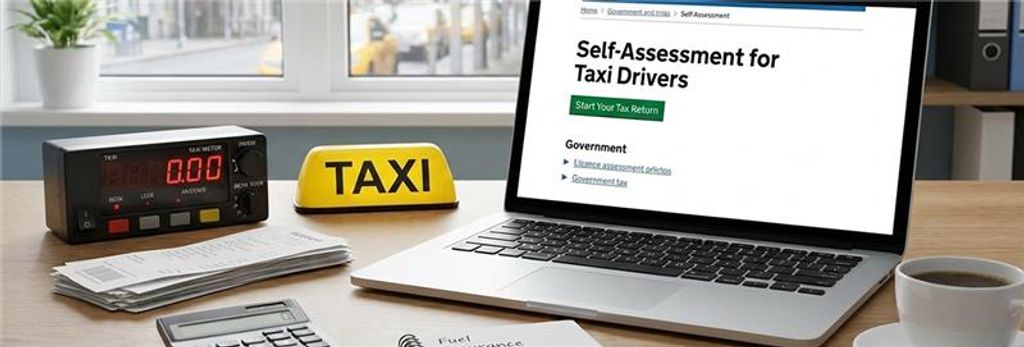
Now being a taxi driver brings you its own freedom and control over your working hours. Simply, you get to decide when to drive and how much to earn for. Yet, there are some major responsibilities surrounding it. It's very crucial to handle the self-assessment for taxi drivers efficiently.
At times, both new and experienced drivers feel unsure about what exactly to report to the HMRC. Also, what they can claim and how they can set-up their business with compliance. Hence, this guide breaks it down for you in very easy terms.
Do Taxi Drivers Need to File Tax Returns?
Now this is something which most people think are redundant!
But, the answer is YES. You are supposed to inform the HMRC about your income if it's more than your personal allowance. It means that you report your profits through self assessment tax returns for taxi drivers. Likewise, you have to pay taxes on those profits left after deducting your costs.
Now, there are some platforms which share your earning data with HMRC. For instance, some cab service platforms share earning data with the HMRC. Consequently, the HMRC gets an accurate record of your earnings altogether.
Registering yourself As Self-Employed
So, to begin, you have to first register yourself as self-employed. The process is very simple and can be done online!
Once registered, you will be issued an Unique Taxpayer Reference (UTR) by the HMRC. Remember, that you must be registered by 5th October in your second trading year.
Whereas, the self assessment for taxi drivers is due by 31st January every year. Also, if filing gets delayed then it will lead to hefty penalties. So, always submit early to avoid it and keep a safe window for any corrections.
What Tax Will You Pay?
Now, you will be only paying taxes on your profits!
That’s why good and clean records are very essential. Keeping accurate records of your fares, fuel, and expenses throughout the year is crucial for taxi drivers. Learn what records you must maintain: Bookkeeping Basics for UK Freelancers: What Records You Must Keep for HMRC You can avoid over paying by keeping a full track of your fares, fuel and other business expenditures.
Now, there are many things which fall under HMRC taxi driver expenses. But they must be related to your work. As, you cannot claim any sort of personal expenses at all.
Allowable Expenses for Taxi Drivers
Clearly, taxi drivers in the UK can claim a wide range of costs including:
- Fuel and repairs
- Licence and badge fees
- Car washes and valeting
- Insurance
- Loan interest for buying the vehicle
- Breakdown cover
- MOT and servicing
- Phone costs for work
- Parking, tolls, and radio hire
- Advertising
- Accountant fees
Now, there are just some typical allowable expenses for taxi drivers. Although it varies from one another.
Besides, you can claim any mileage if it relates to business usage. But you cannot claim any mileage for going to your licensed areas if you are living somewhere else. This is why a proper bookkeeping or record system is highly necessary.
Uber and App-Based Drivers
Even the drivers who drive for online app based platforms like Uber must follow taxation rules. An uber driver tax return UK submission falls under the same process. But, here the platform provides you with calculated income statements beforehand.
Should Taxi Drivers Consider a Limited Company?
Nowadays, many drivers are preferring the sole trader model. As it is simple and flexible. With this, a limited company may reduce your tax in certain cases but bring higher running costs.
That’s why, you must understand corporation tax, payroll duties and business reporting for effective results. So, for most, the self-employed driver tax UK code is the most practical option.
Conclusion
To sum up, tax rules and filing protocols are very complicated for many!
Hence, TaxSimba can seamlessly handle self-assessment for taxi drivers. If you want accuracy with full compliance then, Let Taxsimba guide you on this.
For complete information on self-assessment deadlines and how to file, visit here.